

Red-Tailed Black Cockatoos and the Fragility of Old Forests
The Red-tailed Black Cockatoo is one of Australia’s most recognisable birds, its tail marked by deep red feathers that flash in flight. It has a distinct call, more like a creaking door than a bird whistle. Yet in many regions, this call is becoming less common as the species becomes increasingly dependent on landscapes under pressure.

Red-tailed black cockatoos rely on old forest habitats. They require deep hollows for nesting, which can take over a hundred years to form naturally. If native forests are disturbed and mature trees are lost, these hollows cannot be quickly replaced, and local breeding opportunities can decline significantly. This makes them particularly vulnerable to environmental change.

While the species as a whole is widespread across Australia, some regional populations are in serious decline. The South-eastern Red-tailed Black Cockatoo, for example, is listed as endangered. Their reliance on mature ecosystems makes them indicators of environmental health: where they persist, key ecological structures remain intact; where they decline, it reflects deeper changes in the landscape. Their conservation is therefore not only about preserving a familiar and iconic bird, but about maintaining the long-term integrity of the ecosystems they, and many other species, depend on.
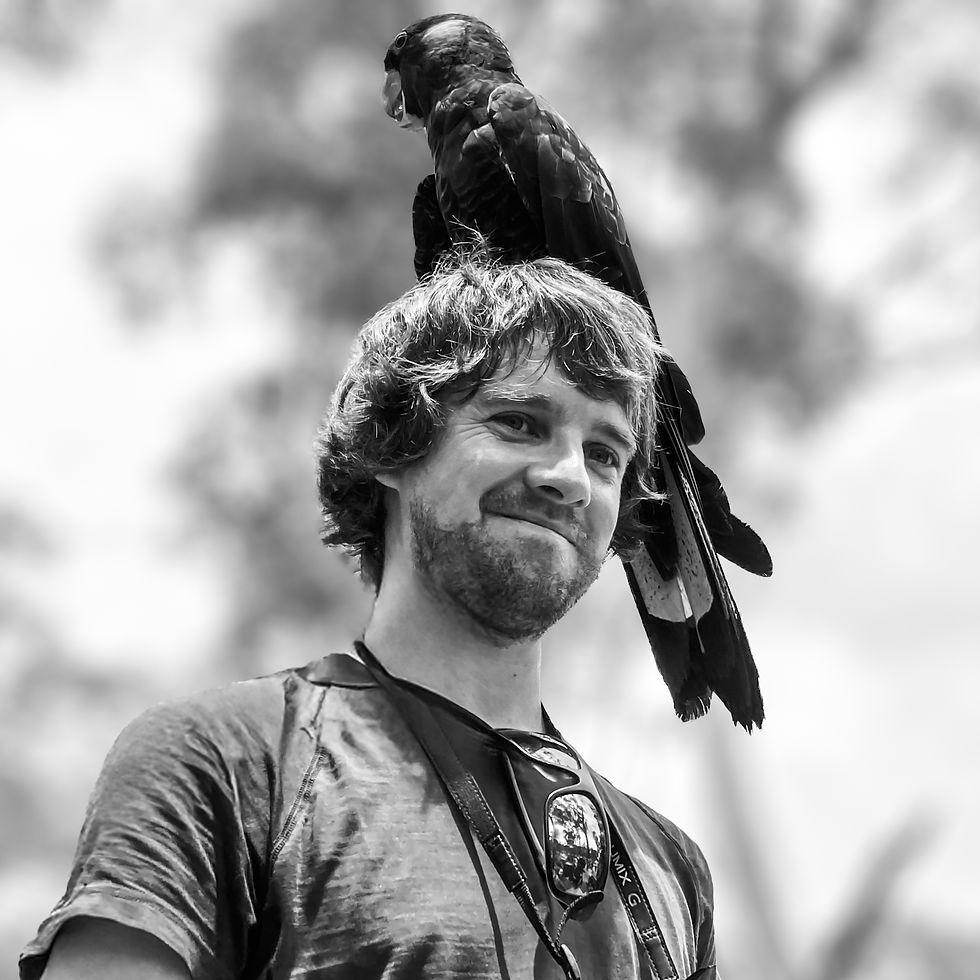
Readers from Sydney who want to learn more about native bird conservation can explore organisations such as Feathered Friends, which provides public education and information on Australian birds and conservation challenges. Their programs are designed to be accessible to a wide audience, including children, and offer opportunities to learn about conservation in an interactive setting. Photos in this post were taken at the Feathered Friends Black Cockatoo Conservation Experience.
Comments